
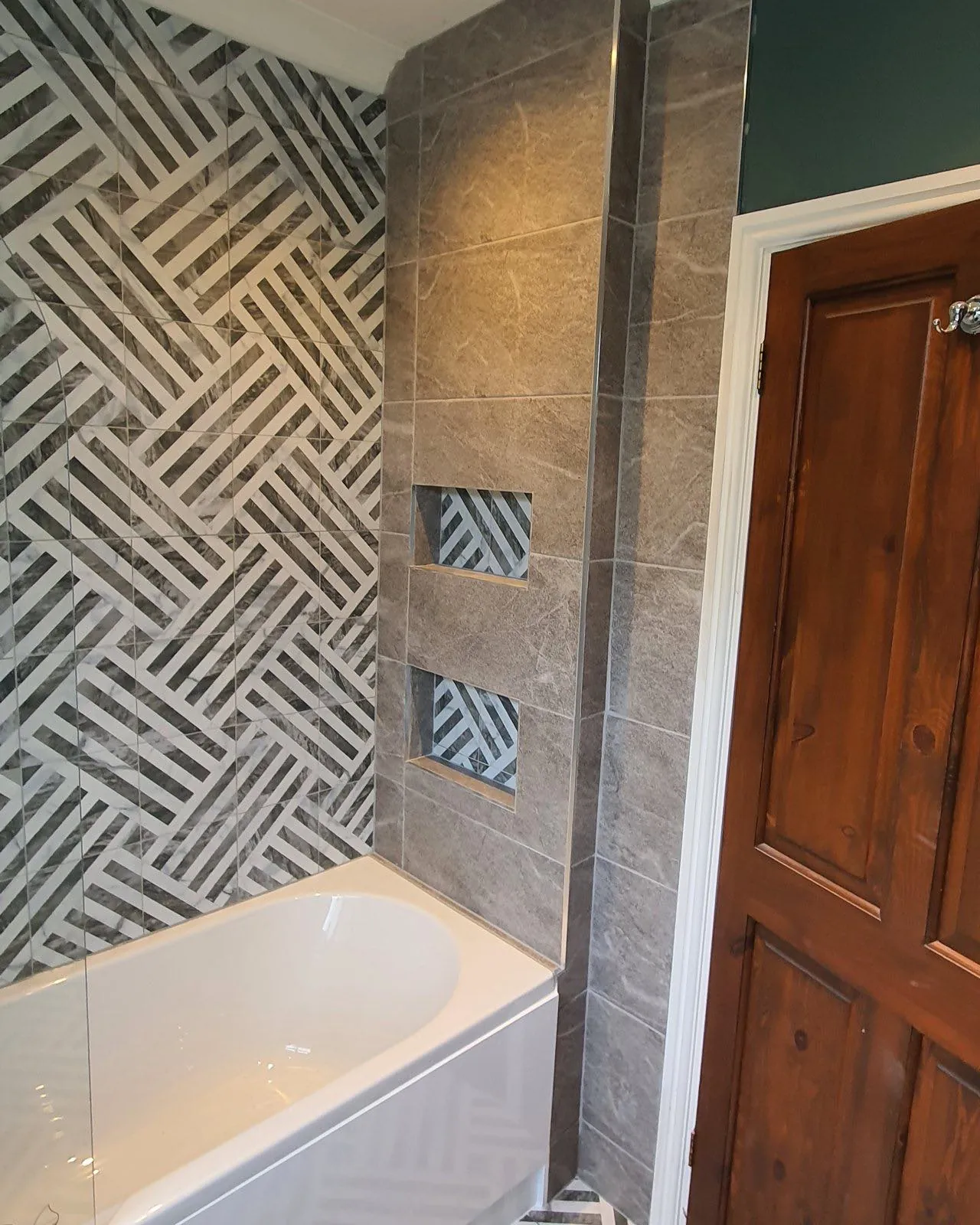
Tiling Advice
Porcelain or Ceramic Tiles for Your Bathroom?
Porcelain tiles are denser and absorb less water than ceramic, which makes them the stronger choice for bathroom floors, showers and wet rooms. Ceramic tiles are lighter, easier to cut and usually cheaper, and they work well on bathroom walls and splashbacks. Many bathrooms use porcelain on the floor and ceramic on the walls.
Both porcelain and ceramic tiles are made from fired clay. The difference is in the clay mix and how they are fired, which changes how dense and water resistant the finished tile is.
The key difference: water absorption
Tiles are classified under the standard BS EN 14411. According to Tile Mountain's guide to porcelain vs ceramic, porcelain falls in group BIa, with water absorption of 0.5% or less. Ceramic wall tiles typically absorb more than 3%. Lower absorption means a tile copes better with constant wetting and is less likely to be damaged by water over time.
That does not make ceramic a bad choice for a bathroom. Its glaze protects the surface, and on walls it does a good job. It is less suited to floors that get soaked and walked on every day.
Porcelain: pros and cons
- Strong and hard-wearing: suits floors, busy family bathrooms and kitchen floors.
- Low water absorption: a good fit for shower floors, wet rooms and walk-in showers.
- Wide choice of looks: stone, marble, concrete and wood effects, and large formats.
- Harder to cut and drill: it needs diamond blades and wet cutting, which takes more time on site.
- Heavier: large porcelain tiles need a flat, solid background and the right adhesive.
Ceramic: pros and cons
- Lighter and easier to cut: quicker to fit around pipes, windows and niches.
- Usually cheaper: a good choice for large wall areas.
- Great for walls: bathroom walls, splashbacks and areas that only get splashed.
- Less suited to wet floors: it relies on the glaze, and chips can expose the softer body underneath.
Other things to think about
Slip resistance
Polished tiles look smart but can be slippery when wet. For bathroom and shower floors, choose a tile sold as suitable for wet floor areas, or a matt or textured finish. Smaller tiles on a shower floor give more grout lines and more grip underfoot.
Tile size
Large tiles mean fewer grout lines and a cleaner look, but they need very flat walls and floors and more cutting around fittings. Small rooms can still take large tiles. It is more about the background and the layout than the room size.
Grout
Grout is the part that gets dirty and absorbs moisture. A mid-grey or a colour close to the tile hides marks better than bright white. In showers, ask about more water-resistant grouts.
What goes behind the tiles
Whatever tile you choose, it is not a waterproof barrier on its own. Showers and wet areas need tanking first, as explained in our guide to bathroom tanking. Good ventilation also keeps grout and silicone cleaner for longer, which we cover in bathroom condensation and extractor fans.
Looking after tiles once they are in
Both types are easy to live with if the basics are done well. Wipe walls and screens down after showers to stop limescale and soap building up, and use a cleaner the tile and grout makers recommend rather than harsh acids or bleach, which can wear grout over time. Keep an eye on the silicone around the bath, tray and basin. When it starts to lift, crack or go black, it is worth replacing promptly, as it is the seal that stops water getting into the joints where tiles meet the suite. Order a few spare tiles from the same batch and keep them, so a cracked tile can be swapped later without a colour mismatch.
A simple way to choose
- Bathroom floor: porcelain, with a slip-resistant finish.
- Shower walls: porcelain or ceramic, both fine over proper tanking.
- Other bathroom walls: ceramic works well and keeps costs down.
- Kitchen splashback: ceramic or porcelain, chosen for looks and ease of cleaning.
- Kitchen floor: porcelain for durability.
Tiling by ATR
We tile walls and floors as part of every bathroom renovation and kitchen renovation, and as a job on its own under tiling and finishing. That includes grouting and sealing properly, fitting skirting and architrave, silicone sealing around baths and sinks, and a snagging check before we call the job done.
Choosing tiles in Upminster or Grays?
We cover Upminster, Hornchurch, Romford, Grays and the rest of Havering and Thurrock. Call 07795 673584 or ask for a free quote and we can talk through the tiles you have in mind.
FAQs
Common questions
Can ceramic tiles be used in a shower?
Yes on the walls, as long as the area is properly tanked behind them. For shower floors and wet rooms, porcelain is usually the better choice.
Are porcelain tiles more expensive to fit?
They can take longer to fit because they are harder to cut and drill, and large formats need very flat backgrounds. The difference depends on the tile and the room.
How can I tell porcelain from ceramic?
Check the product details for the BS EN 14411 group or water absorption figure. Porcelain is group BIa with absorption of 0.5% or less.