
Insurance Repairs
Water Damage From a Leak: What to Do Before You Claim
Turn off the water at the stopcock, switch off electrics near the leak if it is safe to do so, and take photos before you clear anything up. Then call a plumber to stop the leak and contact your insurer with your policy details. Dry the area as much as you can, and keep damaged items and receipts until your insurer says otherwise.
Leaks from pipes, tanks, washing machines and shower trays are usually listed in a policy as escape of water. The first hour after you find a leak makes a real difference to how much damage it does and how smoothly the claim goes.
Step 1: Stop the water and make it safe
Aviva's escape of water guidance puts these first, and every insurer says much the same:
- Turn off the main water supply. The stopcock is often under the kitchen sink, but in some homes it is in a hallway, cupboard or garage. Find it and check it turns before you ever need it.
- Switch off electricity near the leak if it is safe to reach the consumer unit. Water and electrics do not mix, and water coming through a ceiling light is a sign to keep well away.
- Move valuables and furniture away from the water if you can do so safely.
Step 2: Record the damage
Before you start mopping up, take clear photos and videos of the damage, the source of the leak if you can see it, and anything affected. Wide shots of the room and close-ups both help. Write down when you found it and what you did. Your insurer will want to see the damage as it was, and good photos make the conversation about what is covered much easier.
Step 3: Call a plumber, then your insurer
Get the leak itself fixed first so it cannot keep causing damage. Then contact your insurer with your policy number. Many policies have an emergency helpline. Your insurer will explain the next steps, which may include a visit from a loss adjuster for larger claims. Ask whether they want to use their own contractor or are happy for you to get your own quotes.
Step 4: Start drying out
Open windows, keep the heating on if it is safe, and lift wet rugs and soft furnishings. Ventilating and drying the area as much as possible stops the damage spreading and reduces the risk of mould. Bigger leaks may need professional drying equipment, which your insurer may arrange.
Do not throw away damaged items, flooring or units until your insurer has agreed. Keep receipts for anything you spend, such as emergency plumbing or drying equipment.
What the repair work usually involves
Once the area has dried, reinstatement work puts the home back as it was. Depending on where the water went, that can include:
- removing and replacing water-damaged plasterboard, ceilings and plaster
- replacing swollen kitchen units, skirting, doors and flooring
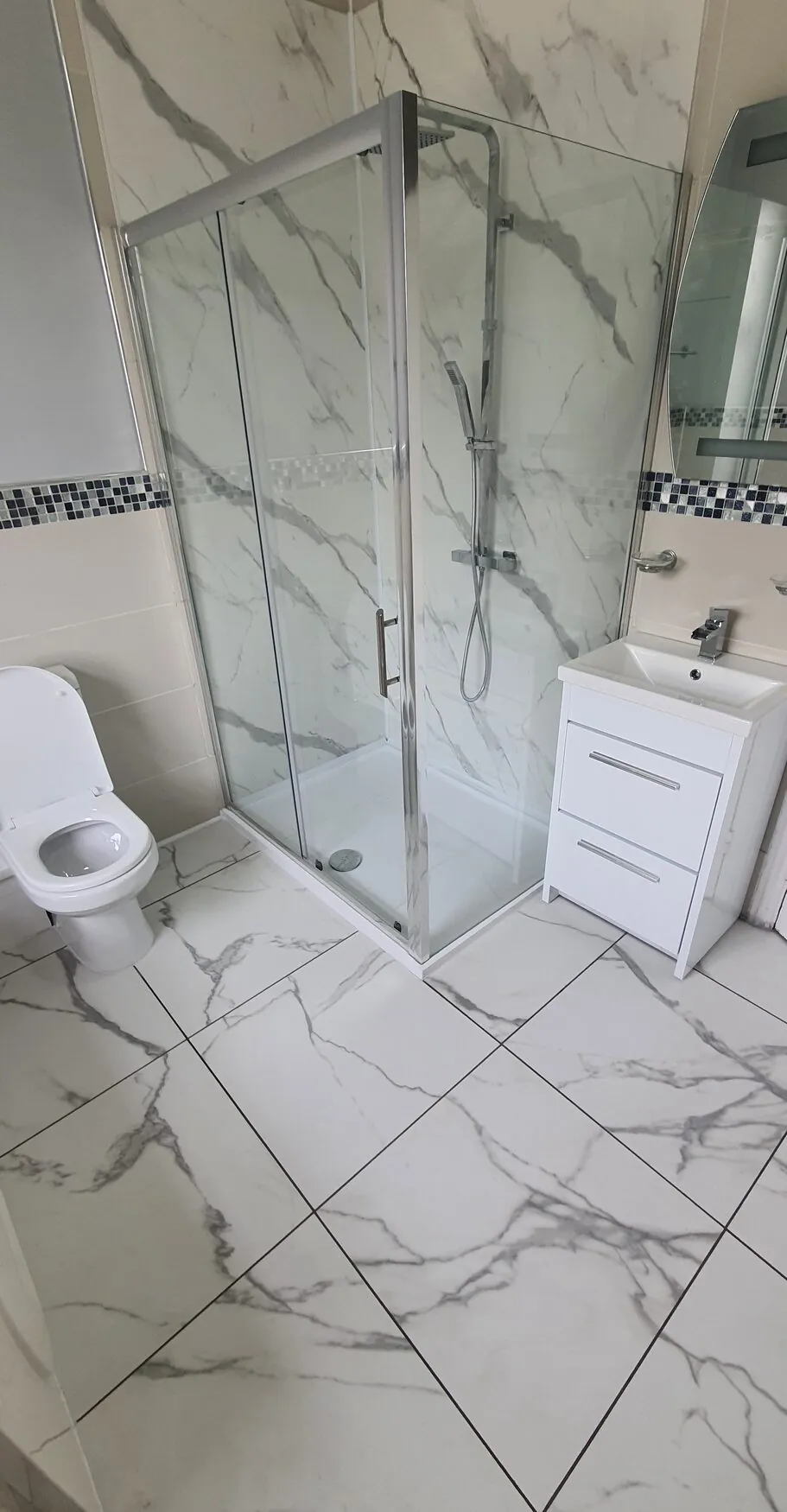
- stripping and retiling a shower or bathroom where water got behind the tiles
- replastering, decorating and making good to match the rest of the room
The work has to match the specification your insurer has agreed. If water got in through a shower that was never properly waterproofed, our guide to bathroom tanking explains why it happens and how it is put right.
Common causes worth checking now
- Washing machine and dishwasher hoses that have perished or come loose.
- Failed silicone around a bath or shower tray.
- Slow drips under the kitchen sink that go unnoticed for months.
- Pipes in lofts and outside walls that can freeze in winter. Lagging vulnerable pipes is a simple job that helps.
How ATR helps with insurance repairs
For insurance repairs we start by assessing the damage and reporting back clearly before any work begins. We then carry out the repairs to your insurer's agreed specification, whether that is a kitchen, a bathroom or wider reinstatement work, and keep the photos and paperwork straight for your claim alongside the work itself. ATR is fully insured and takes on insurance jobs as well as domestic ones.
Dealing with a leak in South Ockendon or Thurrock?
We are based in Grays and cover South Ockendon, Chafford Hundred and the rest of Thurrock and Havering. Once the leak is stopped, call 07795 673584 or get in touch and we can come and look at the damage.
Related advice
FAQs
Common questions
Does home insurance cover the leak itself?
Policies vary. Many cover the damage the water causes but not the cost of fixing the leaking pipe or appliance, and some need extra cover for tracing the leak. Check your policy wording.
Can I choose my own builder for an insurance repair?
Often, yes. Some insurers prefer to use their own contractors, others will accept your own quotes. Ask your insurer before booking any work.
How long should a room dry before repairs start?
It depends on how much water got in and where. Walls and floors need to be properly dry before new plaster, flooring or units go back, or the damp will come through again.